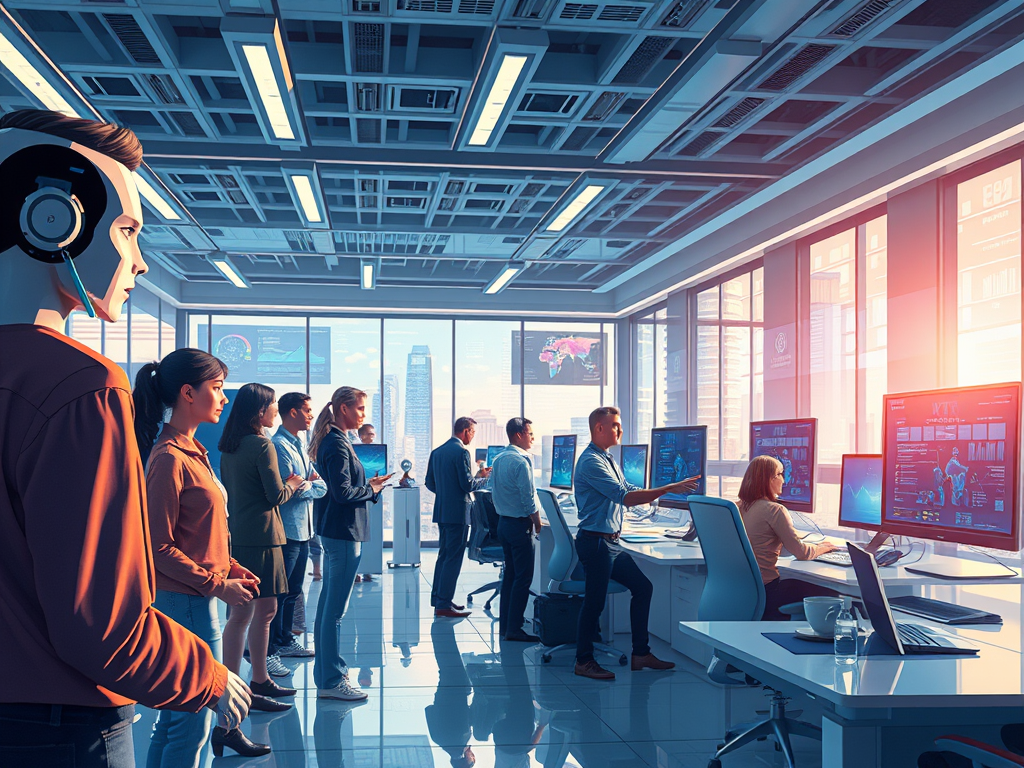


Technology—especially artificial intelligence—has accelerated the pace of work and increased productivity. It has also fundamentally transformed the structure, roles, and expectations within the modern workplace. Intelligent automation is revolutionizing how organizations function, enabling businesses to reimagine job roles, business strategies, and even corporate culture. Tasks that were once repetitive, manual, and time-consuming—like data entry, appointment scheduling, and customer support—are now streamlined. Technologies like machine learning, natural language processing, and robotic process automation play a crucial role in this transformation. 🚀💡📊 This shift initially seems complex. It also appears intimidating. Yet, it opens the door to unprecedented levels of innovation. The growth potential for professionals and organizations that embrace it is immense. Below, we explore the multidimensional impact of AI and technology on today’s work environment.
Generating Fresh Ideas and Strategic Insights 🔍🧠📈
AI integration in the workplace leads to powerful outcomes. It has the capacity to unlock new levels of creativity. It also provides deeper insights. In the past, professionals would spend hours manually mining data, trying to extract patterns and trends. Today, AI algorithms can process massive datasets in seconds, revealing connections that are otherwise invisible to the human eye. This allows leaders and teams to make more informed decisions and iterate on ideas more rapidly. Beyond efficiency, AI enables true innovation. It frees up mental bandwidth. This allows teams to focus on ideation, strategic planning, and experimentation. When merged with data visualization tools, organizations are empowered. Collaborative dashboards and predictive analytics help them take action using real-time intelligence. This fosters a culture of evidence-based innovation. 🎯📊💬

Borderless Collaboration and Agile, Diverse Teams 🌐👥🕒
The traditional limitations of geography have been lifted. Remote work, hybrid teams, and cross-border collaborations have become not just possible but essential. Platforms like Slack, Zoom, Notion, Trello, and Microsoft Teams have created virtual workspaces. In these spaces, employees can communicate, brainstorm, and execute projects across time zones. These digital environments foster inclusivity and give access to global talent. They allow organizations to assemble high-performing teams with complementary skills and backgrounds. In such agile structures, workflows must be intentionally designed to keep alignment and clarity. 🧭📋⚙️ Smart models help with task distribution. Goal-setting frameworks like OKRs preserve clarity. Regular synchronous and asynchronous check-ins confirm team members stay connected. Furthermore, digital leadership skills have become key competencies for managers and executives. These include emotional intelligence in virtual settings. Feedback culture and clarity in written communication are also important.

Developing New Skills and Embracing Lifelong Learning 📚🧩💼
As AI automates routine tasks, the emphasis is increasingly placed on uniquely human skills—those that foster connection, innovation, and resilience. Successful professionals now cultivate both technical acumen and soft skills. The modern workplace values adaptability, problem-solving, storytelling, and leadership as much as it values coding or data literacy. Training programs, internal knowledge hubs, coaching relationships, and professional communities are becoming integral to employee growth. 🧑🏫💬🌱 Learning and development (L&D) departments now harness AI to personalize learning paths based on employee goals and job requirements. This alignment of personal growth with organizational needs results in higher engagement and performance. Organizations that emphasize continuous learning as a core value often achieve better outcomes than their competitors. They excel in innovation, employee retention, and customer satisfaction.

Work-Life Integration and Mental Well-Being 🧘♂️💻🌿
Technology has offered unprecedented flexibility in where, when, and how people work. Employees now have tools at their fingertips to design their ideal work environments, balancing productivity with personal well-being. Yet, this flexibility can blur the lines between personal and professional life, leading to overwork and digital fatigue. Structuring workdays smartly can reduce burnout. Techniques like deep work sessions, scheduled breaks, “no meeting” zones, and flexible hours improve performance. 🕰️💬💡 Employers are increasingly adopting employee well-being platforms. They are also implementing mental health resources and culture initiatives. These initiatives aim to foster emotional safety and sustainable growth. Technology, when used mindfully, enables employees to manage their energy. They can focus on meaningful work without sacrificing their personal lives.

Expanding Markets and Enhancing Customer Experience 📈🎯💬
Advanced analytics and AI tools allow businesses to better understand, segment, and target their audiences. From precision-targeted ads to predictive lead scoring, businesses are now equipped to deliver highly personalized experiences across digital touchpoints. AI-powered chatbots give instant, intelligent customer service, while recommendation engines increase average order value by guiding purchasing decisions. Moreover, businesses are using AI to analyze customer sentiment, predict demand, and enhance pricing models. 🌍💡🛍️ For service-oriented professionals, this means refining positioning. It also involves clarifying their value proposition. Professionals need to offer tiered solutions that match different customer personas. In saturated markets, it’s no longer enough to have a good product. You need to communicate the right message to the right person at the right time. This should also be done with measurable results.

Navigating the Future of Work with Intention 🧭🚀💼
The integration of AI and modern technologies into the workplace is not a passing trend—it’s a paradigm shift. It’s reshaping industries, redefining job roles, and elevating expectations. For those willing to adapt, this transformation offers boundless potential. The future belongs to those who can redesign outdated business models. Creating high-functioning distributed teams and scaling up personalized learning programs will be crucial. Leveraging real-time customer data is also key. Success will come to those who combine creative thinking with strategic execution.
The key lies in embracing technology not as a replacement for human effort, but as a catalyst for elevating it. AI becomes a partner in achieving not just productivity. This occurs when it is paired with intentional system design. Emotional intelligence and a purpose-driven strategy are also crucial. Together, they lead to sustainable excellence and meaningful impact. 🌟📊💖


Leave a Reply