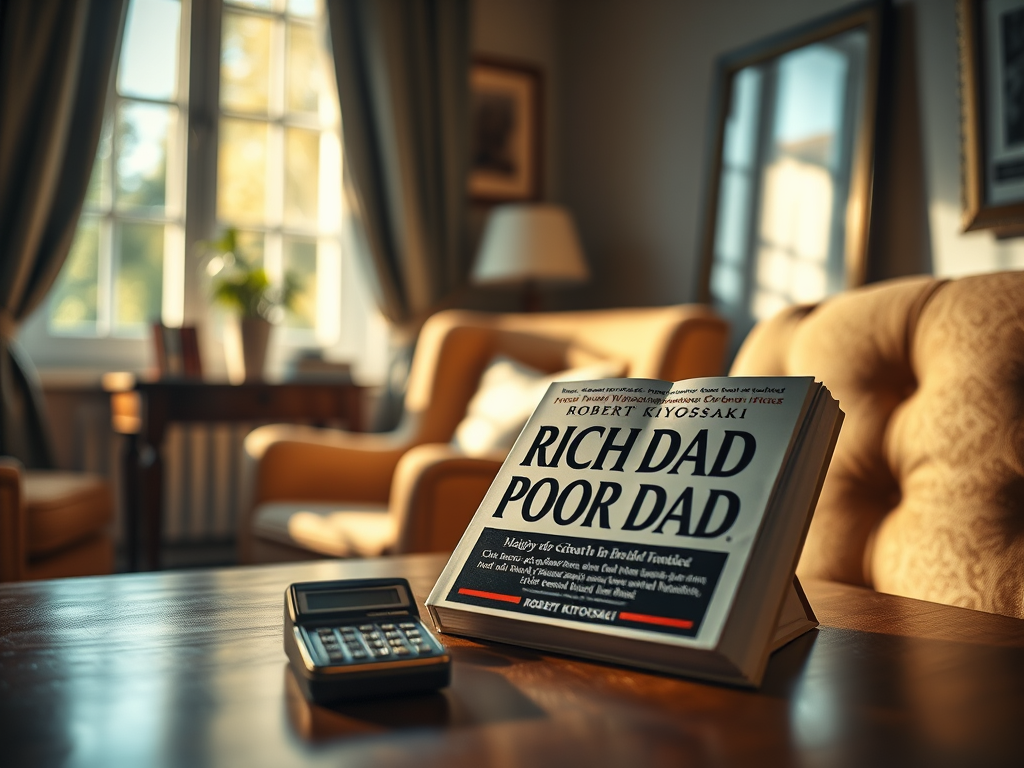


The choice of a single book to revisit for the rest of my life is clear. It would be Rich Dad Poor Dad by Robert Kiyosaki. This work transcends its surface identity as a financial guide. It serves as a profound repository of insight. It provides motivation and personal clarity. Over time, it has become an intellectual anchor. It realigns me with my foundational values and entrepreneurial convictions. This is particularly true during periods marked by ambiguity or high-stakes decision-making. 📚💡🧭
The Value of Re-reading 🔄📘🌱
Certain books imprint knowledge or emotion upon a single reading—much like an ephemeral but resonant dialogue with a passing stranger. They serve a temporary purpose. But then, there are those exceptional texts that stay dynamic across time, evolving in meaning as the reader matures. These are the enduring works that join us through life’s transformations. 📖👣🕰️
Each re-engagement with Rich Dad Poor Dad yields novel interpretations. This happens not because the text itself has shifted, but because my perspective has. After enduring a failed venture, it rekindled my sense of agency. After a significant win, it reminded me to stay grounded and focused on sustainable growth. These are not mere reflections—they are pivot points in personal development. 🔍💬🔥
One particularly formative episode occurred. I found myself depleted by the demands of corporate life. I stood at a metaphorical crossroads. I approached the book with a sense of urgency and openness. Kiyosaki’s insights on mindset, autonomy, and the architecture of purpose-driven wealth provided the mental clarity I needed. They also gave me the encouragement to articulate a new professional trajectory. 🛣️🧠💪

Why Rich Dad Poor Dad? 🧾🏛️🚀
This is not just a manual for financial literacy; it is an ideological reframing. Kiyosaki deconstructs conventional wisdom about money. He redefines success as a role of freedom and intentional living. This is rather than focusing on earnings alone. 💸🔓🗺️
The book’s utility centers around the “Cashflow Quadrant.” This framework categorizes income-generating roles into four domains: Employee, Self-Employed, Business Owner, and Investor. This model provided a strategic lens. I evaluate not only my current status but also my desired future. 🧩📊🏗️
In tactical decision-making, I continue to reference the principles in this book. This is true whether it’s for investment choices, product development, or recalibrating goals. I also reference them in broader philosophical orientation. Its conceptual clarity provides much-needed guidance in an increasingly complex economic landscape. 🎯🔄📈

A Book That Grounds Me 🌍📖🧘
In a world defined by volatility and acceleration, Rich Dad Poor Dad offers a centering force. It emphasizes taking deliberate action. Learning from lived experience is crucial. Cultivating a vision of success rooted in values is more important than seeking external validation. 🌐🛠️🌟
I vividly recall the internal debate. Should I invest in a floundering startup or adhere to a more conventional financial path? Re-reading this book helped me differentiate impulsive risk-taking from thoughtful, calculated entrepreneurship. That moment of discernment became one of the most enriching episodes of my professional journey. 🎢💭🏆
I embrace risk—but only when it’s accompanied by informed intent. I pursue ambition—but never without a structural foundation.
Another crossroads appeared when I had to choose between a lucrative, stable job and an unrefined but promising business idea. Conventional logic—and nearly everyone around me—pushed for the former. But Kiyosaki’s philosophy reminded me that long-term significance is seldom built within short-term comfort zones. That reminder continues to influence my most difficult decisions. 💼💡🔄
This book consistently reconnects me with my core identity. It urges me to reject complacency. I must embrace transformation. I should resist the false allure of safety when it comes at the expense of growth. 🔁🧍♂️🔥

What About You? ❓📚💬
I began this reflection with a question. It seems only fitting to conclude in the same spirit. If you only read one book repeatedly for the rest of your life, which would it be? Additionally, why would you choose it? ❔🔄📘
Revisit your own personal library—be it physical or digital. Find the book that repeatedly grounds you, that offers renewed clarity and purpose with each meeting. Consider on the truths it unveils and the principles it reinforces. 🗃️🔍🧭
And if you feel inspired, share your choice in the comments or via social media. Tag me—I would be genuinely interested in discovering which book speaks most directly to your path. Often, the narrative we choose to return to reveals more about us than the story itself. 📝📢💖


Leave a Reply