
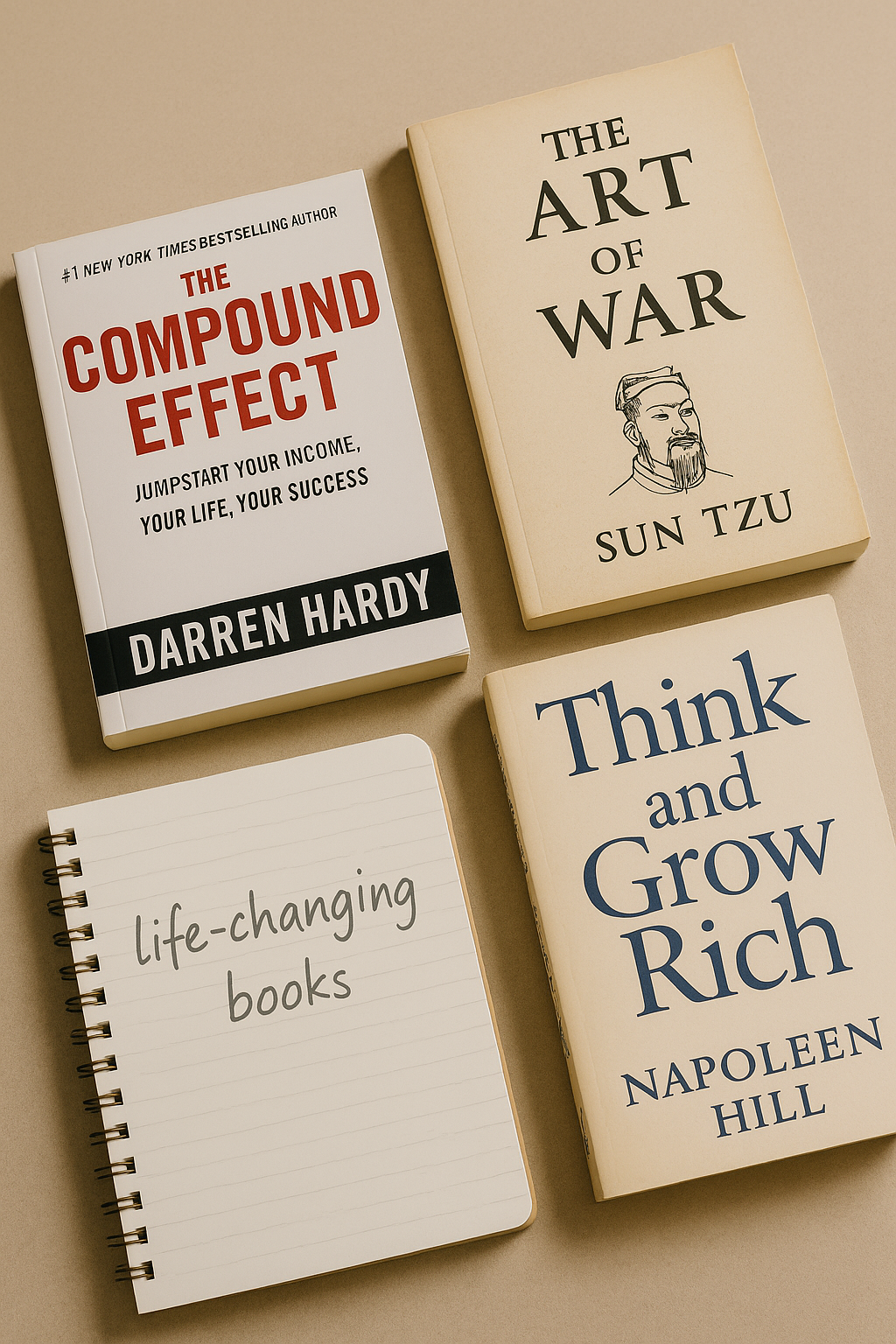
List three books that have had an impact on you. Why?
In every phase of personal transformation, there are a few books that don’t just inform you — they reshape you. For someone like me, who scores high in imaginative openness yet wrestles with emotional vulnerability and perfectionism, the right book isn’t just a tool — it becomes a mirror, a compass, and a battle cry.
Here are three that shook the ground beneath my feet and rebuilt the pillars of my inner operating system.
1. “The Compound Effect” by Darren Hardy
For mastering systems over moods.
I discovered Hardy’s book during a period when my ambition was being sabotaged by emotional volatility — the kind described in my NEO PI-R profile: anxiety, self-doubt, and frequent overwhelm. The idea that small, consistent behaviors outperform emotional spurts of intensity felt like a revelation.
Hardy doesn’t sell motivation. He sells discipline — packaged through the power of automation and feedback loops. That spoke to my “high conscientiousness” when it’s activated, but more importantly, it appealed to my entrepreneurial style that craves autonomy. This book became the blueprint for transforming raw creative chaos into sustainable performance systems — something my career anchor of “General Managerial Competence” desperately needed.
Implemented daily scorecards. Built habits that no longer rely on mood. Saw compound wins across business and health.
2. “The Art of War” by Sun Tzu
For decoding competitive dynamics without losing inner alignment.
Competition has always stirred paradoxes within me. I am drawn to leadership and complexity, yet I recoil at direct, emotional conflict. This internal conflict — a signature of my schema therapy results — often led me to either over-control or avoid entirely.
Sun Tzu gave me something radical: a detached, strategic lens to see power, timing, and maneuvering as an art form — not a moral struggle. It offered me language for what I intuitively felt but couldn’t articulate: that the most elegant way to win is by not fighting.
Reading The Art of War helped me turn mental chess into leadership clarity. It validated that emotional regulation and strategy aren’t opposites — they are allies. And in a world that rewards visibility and velocity, this book gave me a code to move smart — not just fast.
3. “Think and Grow Rich” by Napoleon Hill
For turning vision into vibration.
My worldview has always danced between the analytical and the mystical. With a high score in “openness to experience” and a deep yearning for meaning, Hill’s book aligned both.
It’s more than a money book. It’s about mental transmutation: converting desire into structured belief and belief into disciplined action. The rituals, autosuggestions, and mastermind principles were powerful to someone like me — who is deeply driven by inner autonomy but vulnerable to cognitive noise.
What Hill did was hand me a toolkit to:
Design a personal vision statement. Rewrite limiting narratives. Turn financial ambition into ethical manifestation.
Where Hardy gave me execution, Hill gave me alignment. Together, they formed the foundation for my Life OS — a system I’ve since been building for others.
Each of these books connected to a distinct part of me:
My need for systems (Hardy) My hunger for strategy (Sun Tzu) My quest for spiritual clarity in success (Hill)
And in doing so, they didn’t just shape what I do — they elevated how I decide, lead, and evolve.
Want to see how I use these principles in real life?


Leave a Reply